
Hello from Day 34 in Tucumcari, New Mexico on Historic Route 66!

I thought I’d start with a recap of the Trip Stats as of today before I pick up where we left off. We have:
- Driven about 7,500 kilometers, that’s 135 hours of driving in 34 days!
- Visited 7 National Parks (Badlands, Yellowstone, Grand Tetons, Arches, Canyonlands and Mesa Verde), 3 National Monuments (Devil’s Tower, Mount Rushmore and Chimney Rock) and a cave!
- Had an absolute hoot exploring the highways and byways of America with very little friction, given that we 3 creatures are living in about 180 square feet and have been together 24×7 for 34 days!
The last blog recapped our time in Yellowstone so to continue, on Day 21, we crossed the Continental Divide 3 times on our winding Yellowstone road and then left the park by the South Exit and travelled to Grand Teton National Park.
For those of you who are curious, the Continental Divide marks the spot where rivers flow towards either East towards the Atlantic or west to the Pacific. A place of transition, how very appropriate for we wanders.
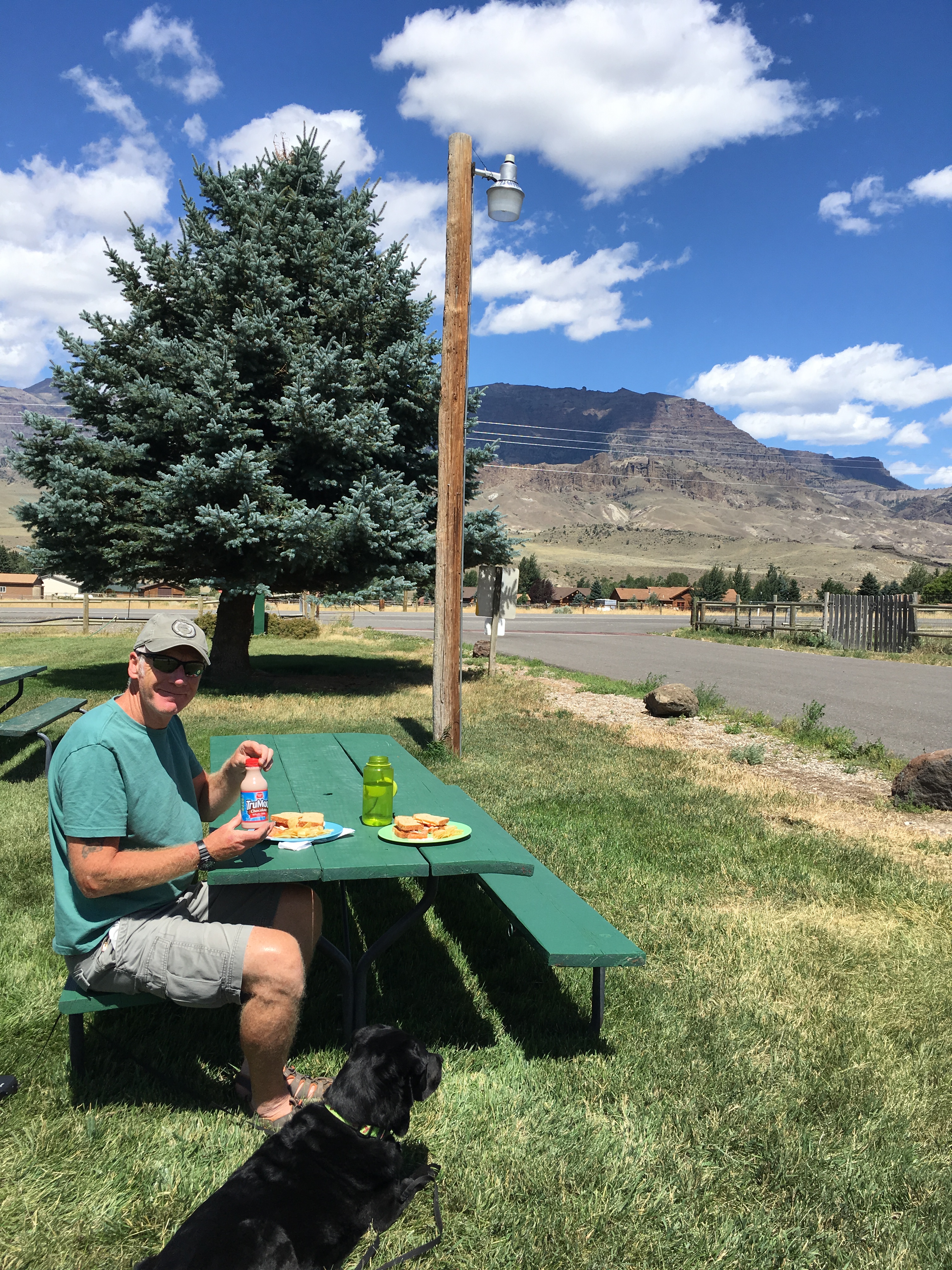
As we entered Grand Teton, we stopped at Flagg Ranch visitor center to picnic, pick up park maps and get some advise on hiking trails from the rangers. As a bonus, we met a cool retired couple from Pennsylvania who were cruising around on electric bikes in the parking lot and they let us both have a go on the “Ariel Flyer”, made in Germany. Lots of fun to ride with power assistance – totally different feeling from pure peddle-power.
We drove through the park and knew we were in the Tetons when we saw the lofty and jagged Teton peaks looking like they were rising directly out of Jackson Lake. The mountains and the water with almost no transition in between them make a stunning scenery cocktail!
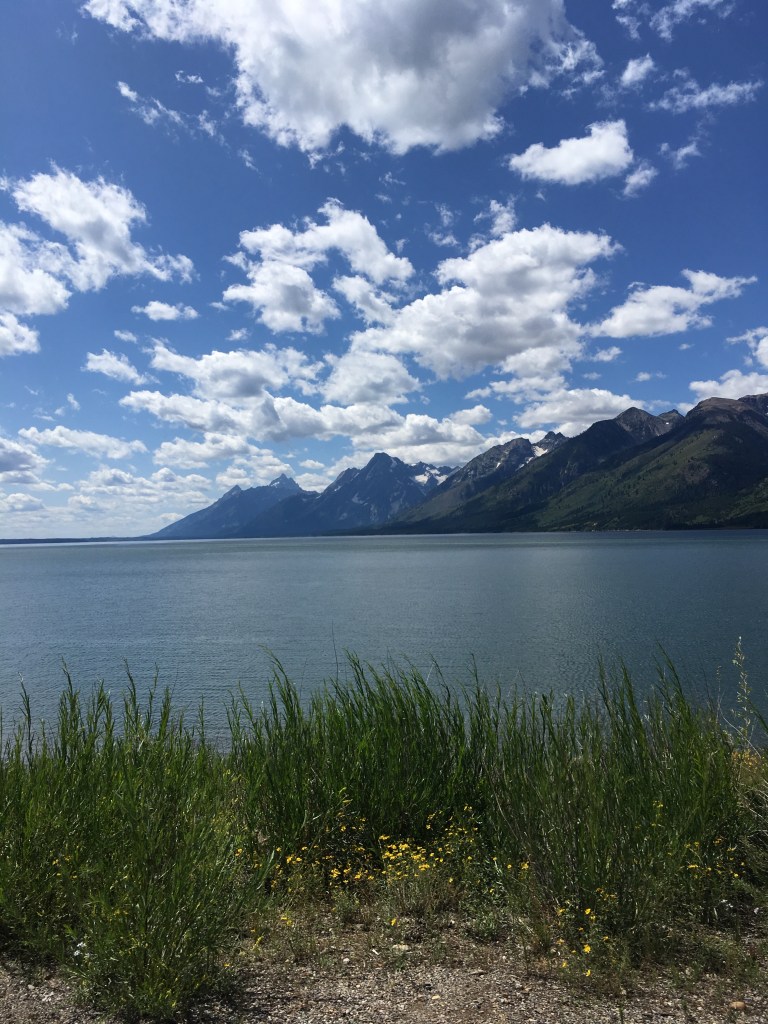
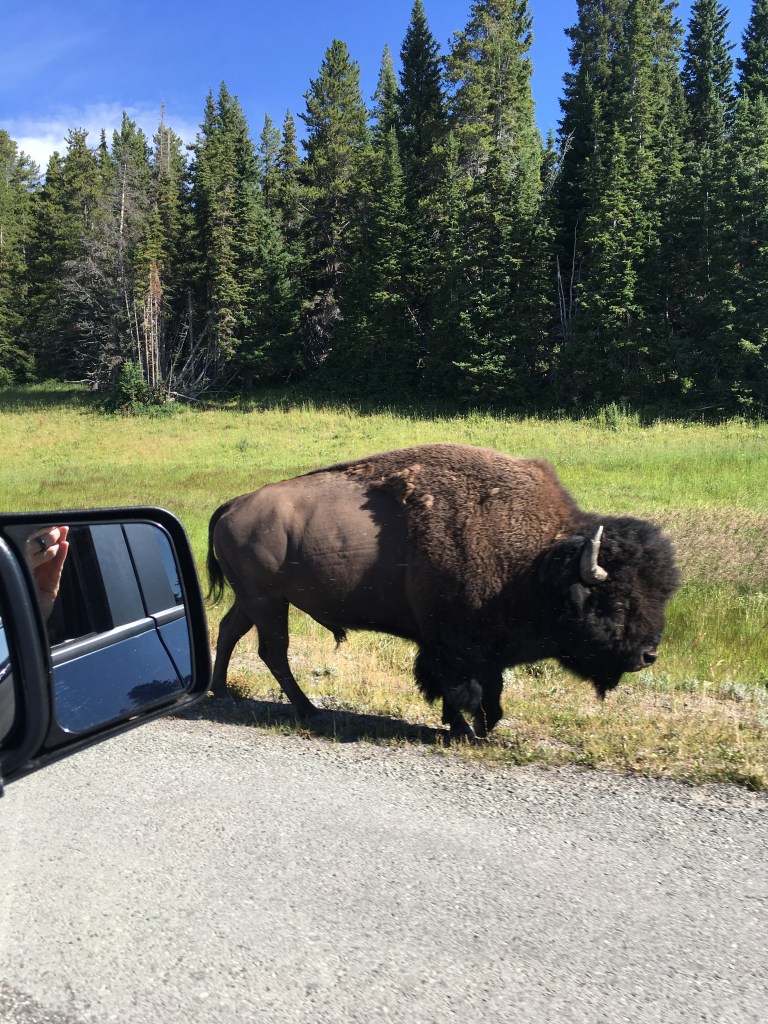
We set up camp just outside the park in Moran, WY and drove back in to explore. At our first scenic turnout, Elk Ranch, we saw a herd of Bison grazing and as we were watching them, 3 Pronghorn galloped across the meadow. Impeccable timing!
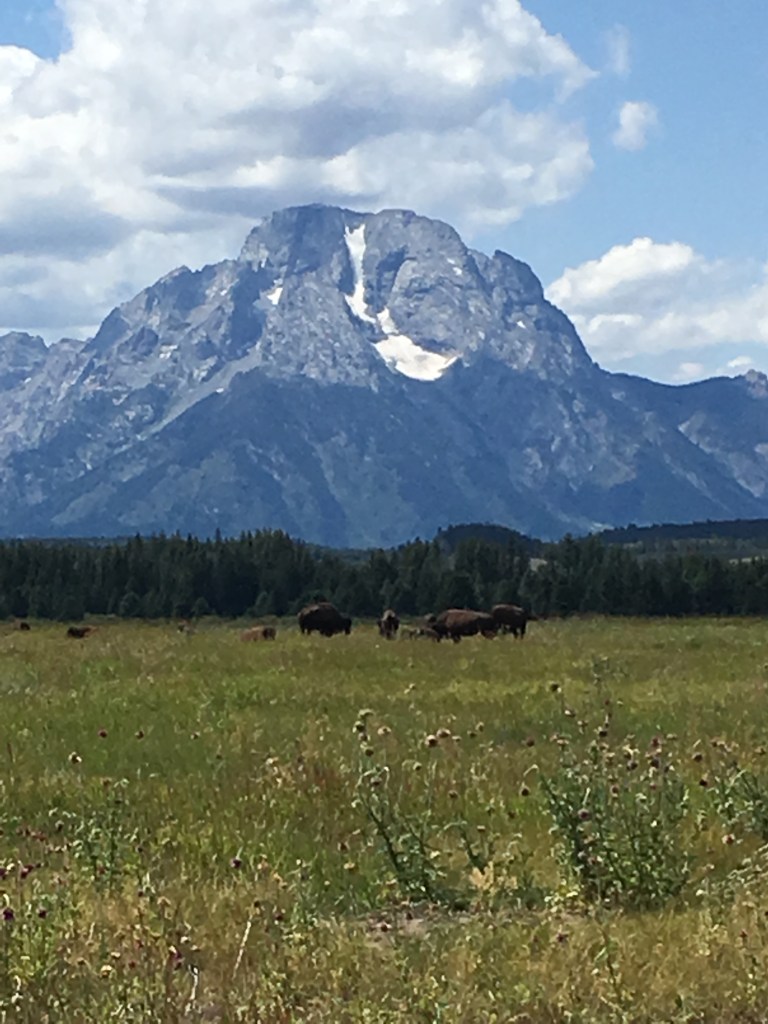
Continuing on south on route 191 through the park, we stopped off at the Snake River Turnout and learned how these incredible, rugged mountain peaks were formed.
About 100 million years ago, a collision of tectonic plates along the west coast of North America bowed-up a huge block of sedimentary rock deposited by ancient seas. About 10 million years ago, movement on the Teton fault caused massive earthquakes – the mountains rose up and the valley floor dropped. The vertical displacement is about 30,000 feet!! The highest peak, Grand Teton, is at 13,770 feet and the valley floor is 6,800 feet above sea level, creating a very dramatic backdrop that’s so impossibly beautiful and incongruous, it looks as if it was a painted backdrop for a stage.
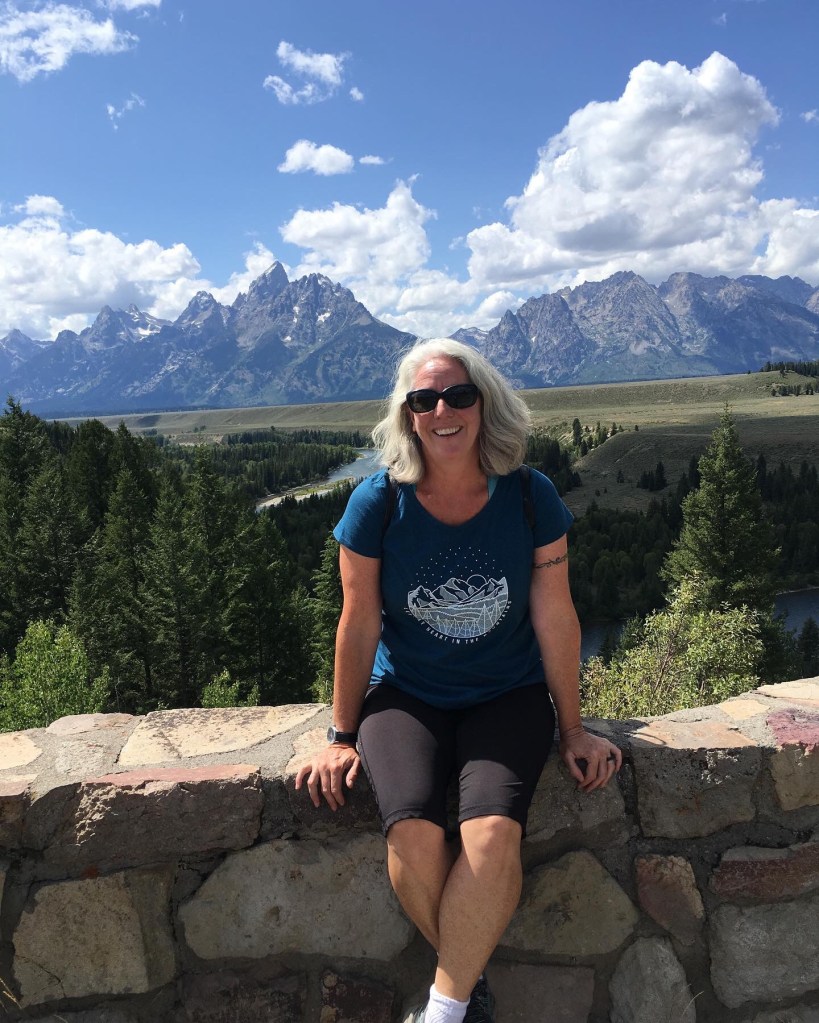
If the earthquakes started the job, erosion has carried on the work of sculpting this rocky aerie. About 2 million years ago, vast glaciers up to 3,500 feet thick flowed south from Yellowstone and filled the valley. Today, there are still 11 glaciers in existence on the high peaks. When we stopped at the Glacier Turnout to learn more about how the ice flows did their work, we met a couple traveling with their grandson and they lent us their “Live a Great Story” flag so we could snap a picture.
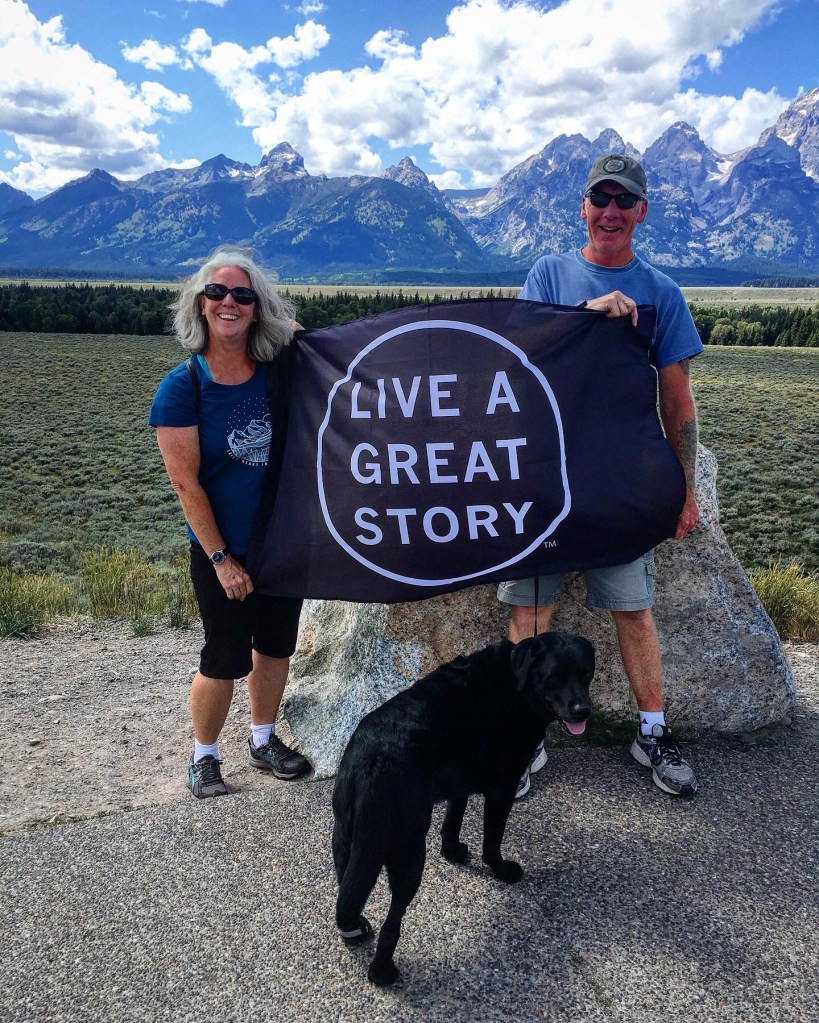
At the time, I didn’t know the scoop on the flag but after posting the picture, I found out it’s a movement out of Austin, Texas that embraces living a full life and one of my old pals, David Jobe, knows the founder. That small world thang kicking in again!
We continued our tour, driving up the interior road that’s closer to the mountains and stopped at the Cathedral Group Turnout. Cool story here – we stood on the exact spot where Ansel Adams took one of his best-known Grand Teton phots! The view of Teewinot, Grand Teton, and Mount Owen from this angle is stunning and again, I cried. There’s something about mountains and me…

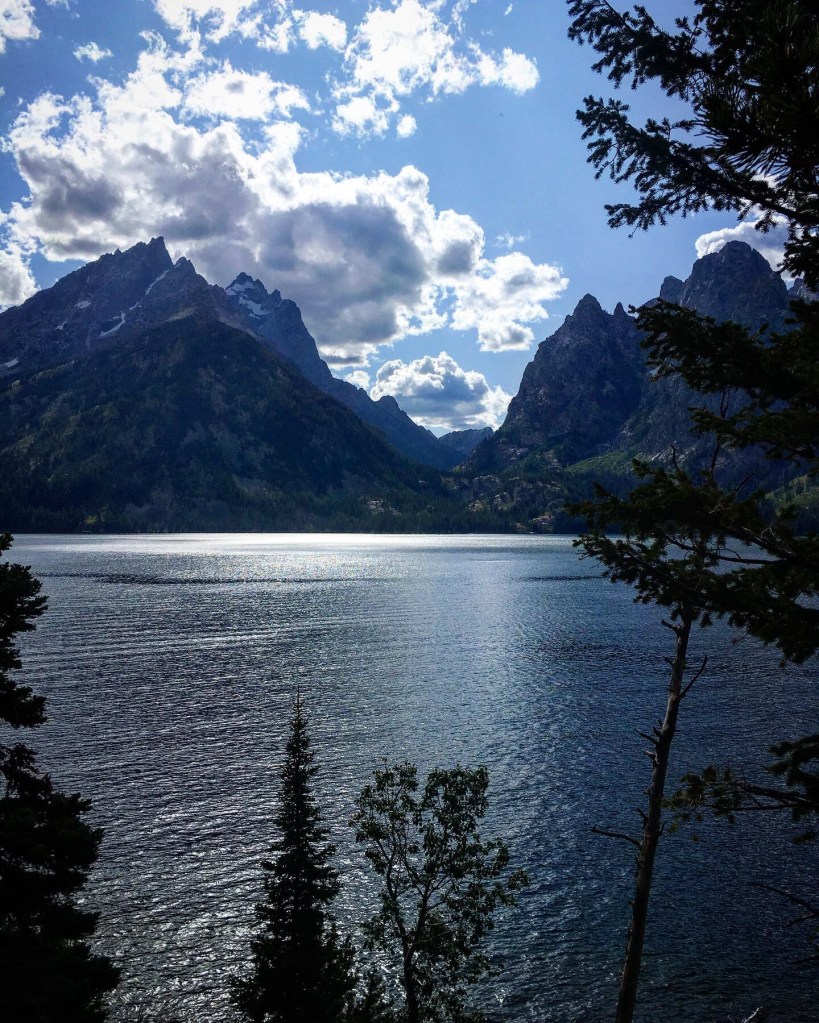
After that, we did the Jenny Lake drive and hiked a short distance with Cassie on the trail before heading back to camp for the evening. Jenny Lake is so very beautiful, with tall pines buffeting the winds as they blow across the water, leaving wind-shaped ripples in their wake.
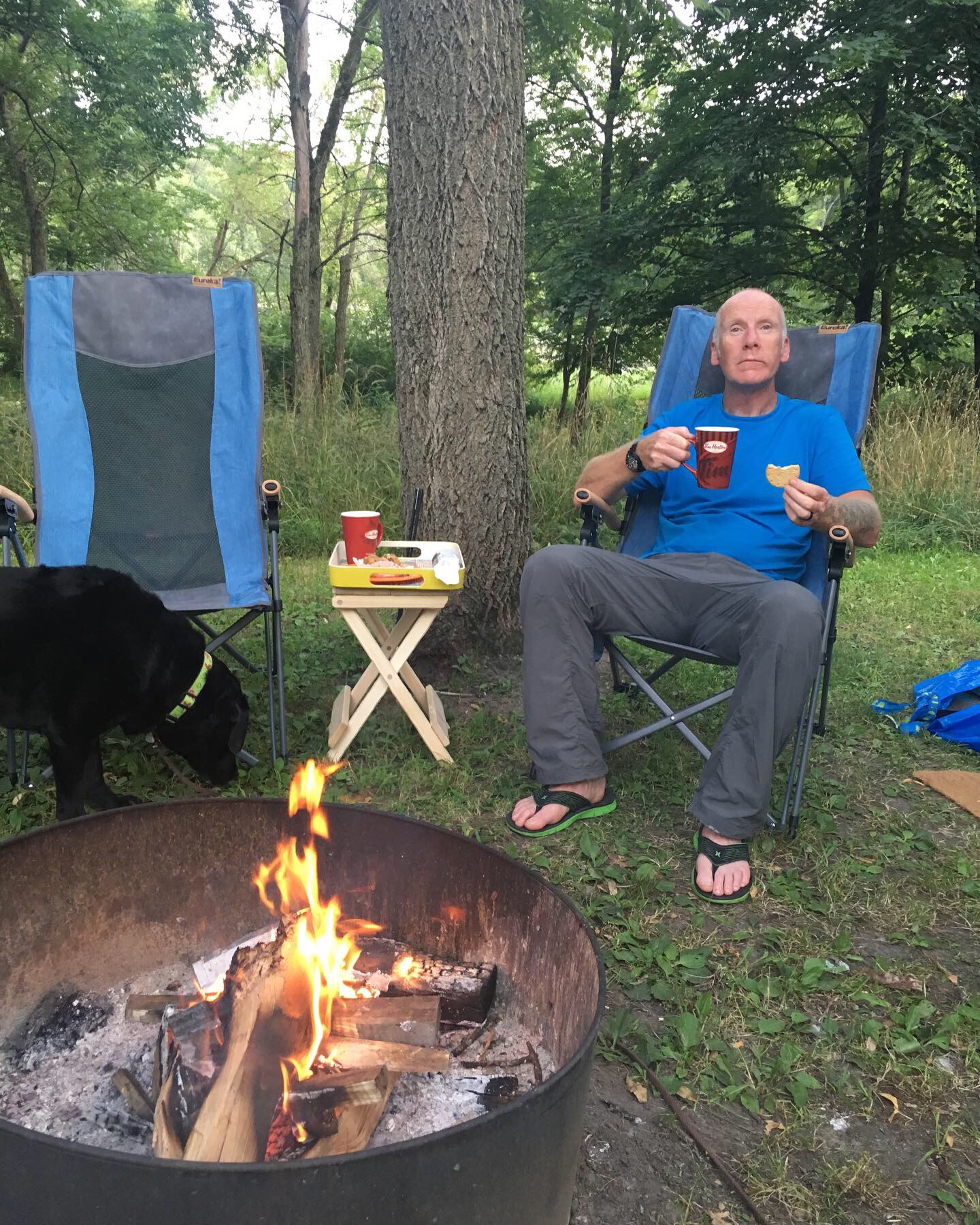
That night, there was a storyteller at our campground so we were entertained by Cracker Jack around the fire pit as we watched the sun set behind the mountains. His best story was about a diner that always had dirty plates and the owner’s excuse was they there as clean as “cold water” could get him. Can you guess the punchline? Cold Water was a dog!

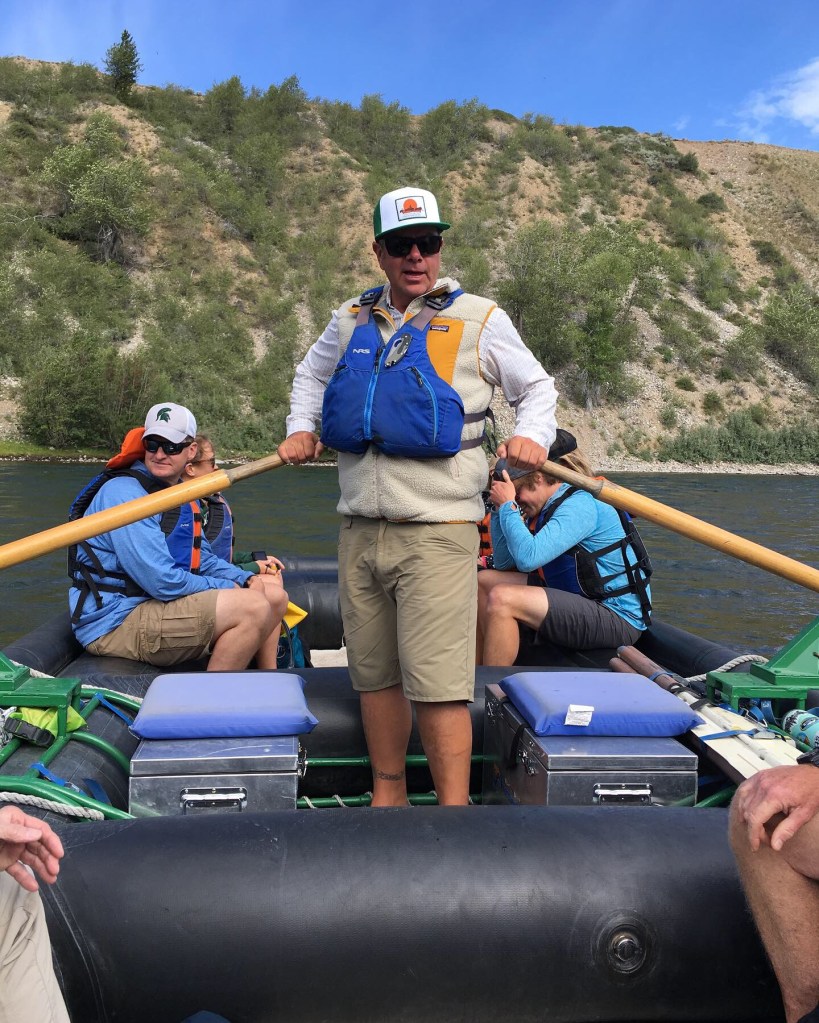
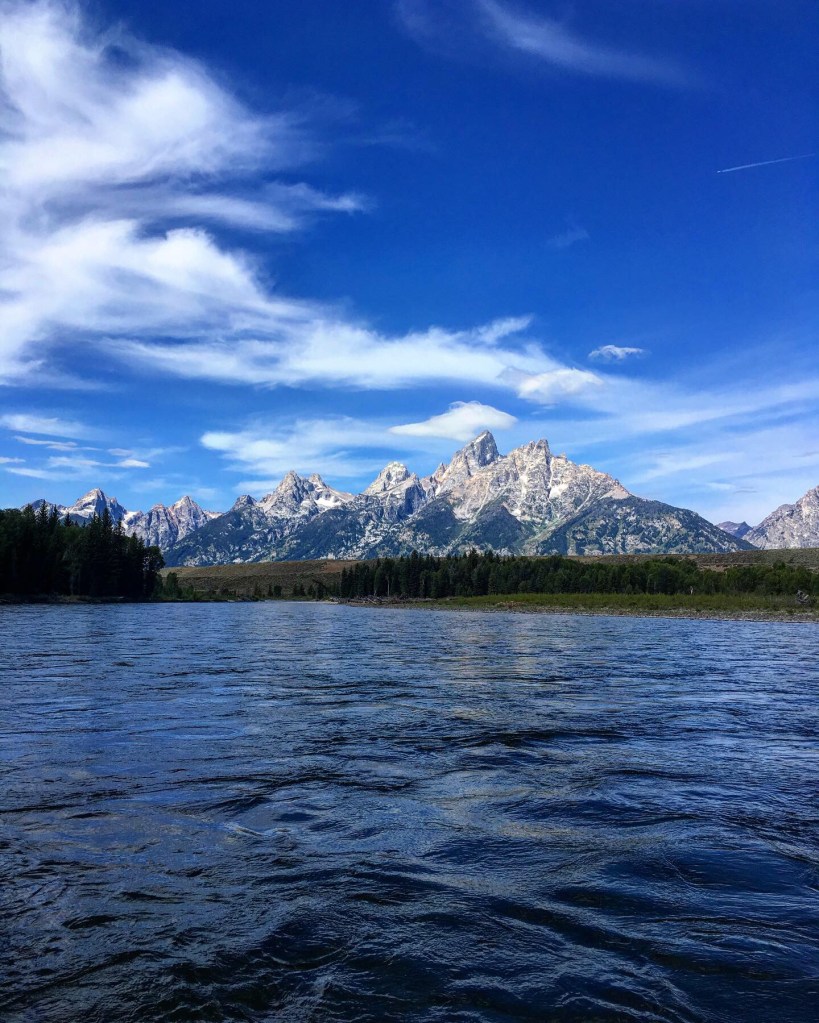
Day 22 found us out in a raft on the Snake River doing a 10 mile float trip downstream from Deadman’s Bar to the Moose Visitor Center. It was a great 2 hours on the water and interesting to chat to our guide about some of the most memorable questions he is asked by tourists. The best ones were, “What time do they let the animals out?” And “Does the crew live on the raft?” (See pictures below). Alas, we didn’t see any moose that day (I guess the keepers forgot to let them out!) but we did see 4 bald eagles.
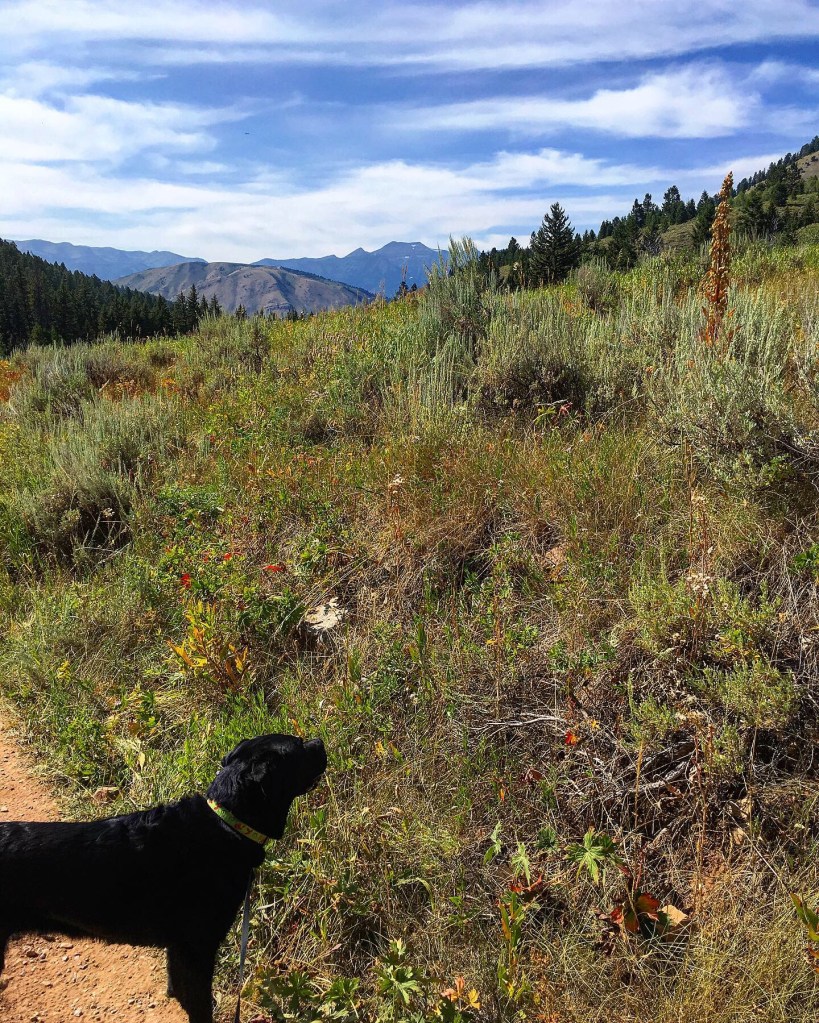
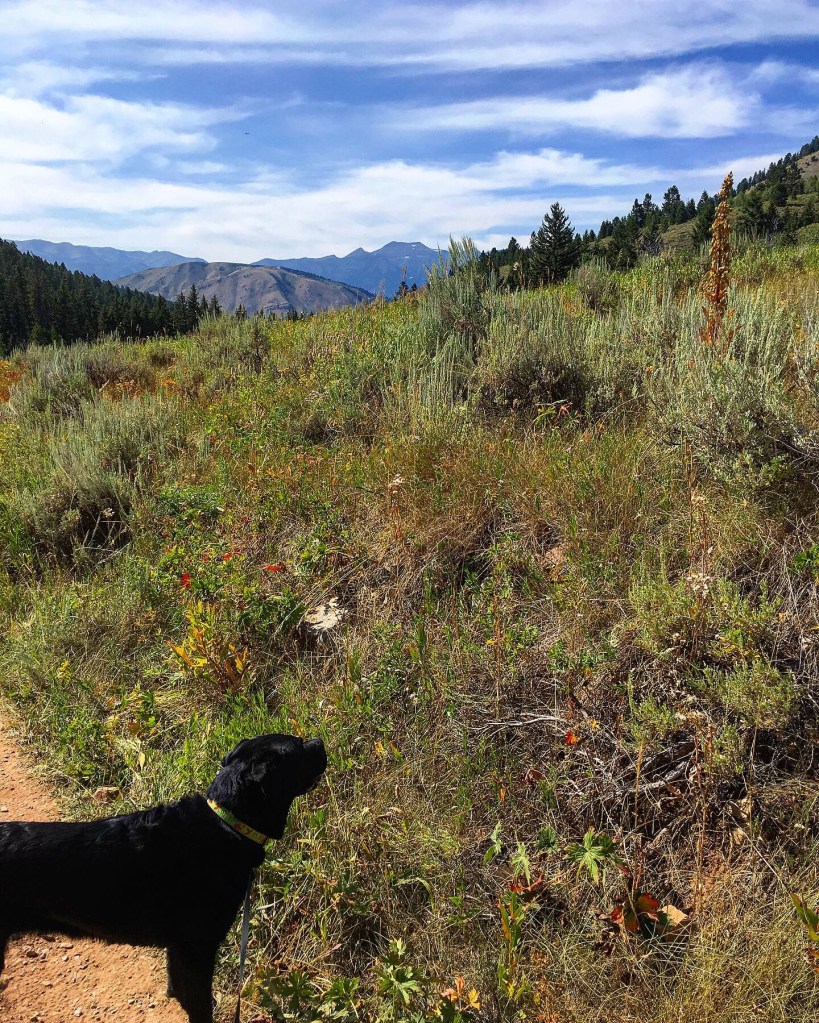
Another small world story, in our raft of 12 people, there was a fun family from Illinois who’s son is now a Veterinarian in Jackson, WY so we were able to get some local intel on where we could taking Cassie hiking as she’s barred from the National Park trails. Dr. Joe, DVM, recommended Cache Creek so the three of us happily spent the afternoon hiking though this great trail system in Jackson.
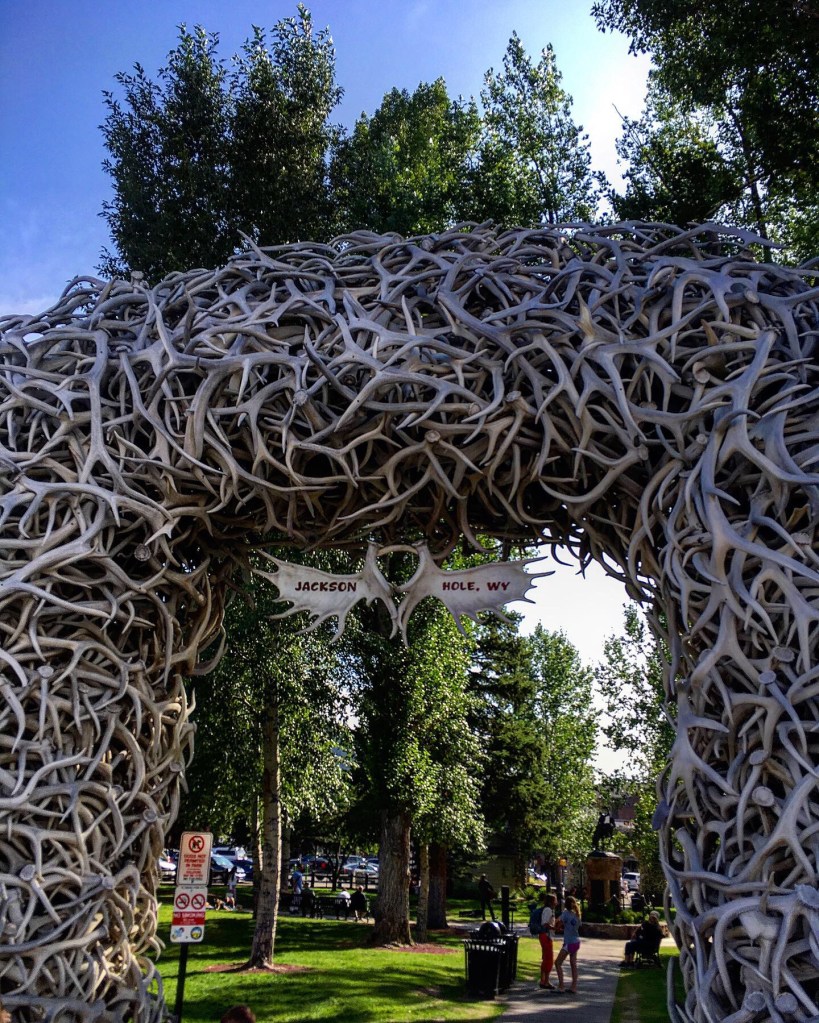
After the hike, we went into town to the central square, described by our veteran raft guide as “Disneyland”. He wasn’t far off – very touristy but hey, when you’re a tourist, you actually do want to see archways made of Elk Antlers. And, before you get too worried about all those horns piled up, no Elks were harmed in the making of the arches – they naturally shed their antlers and these are collected by local scouts to make the tourist attraction.
On Day 23, it was Mick’s 58th birthday and while we were walking Cassie, we met a couple of women who had just retired from the State of Connecticut and one of them used to live in Mystic! For a country so vast, we have been continuously amazed by the “small world” connections we’ve found!
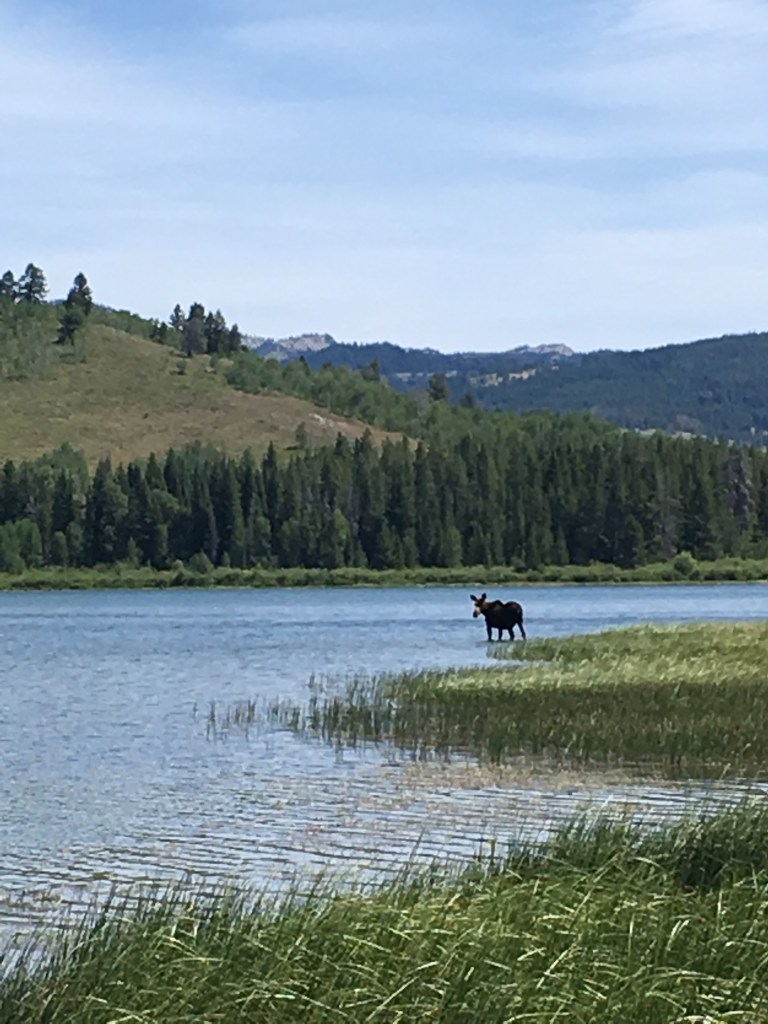
To celebrate The Mickster’s day, we did a beautiful 6 mile hike around Two Oceans Lake – the first half through alpine meadows with the Tetons as the backdrop and the second half hugging the lakeshore. We saw very few people on the trail – and one group we exchanged hellos with said they had seen a Bull Moose across the lake where we had just come from.

Getting out the binos, we had a good view of Mr. Moose wallowing in the shallows and breakfasting on aquatic plants on the other side of the lake. Another interesting fact we learned: Moose can dive down underwater up to 18 feet! Who knew?!? And how did they land on 18 feet instead of 15 or 20? Did they hold a Moose Diving Competition? See how travel broadens your horizons and get your brain working?

We continued on our trail thinking that was all of the good wildlife spotting luck we would have that day and then heard a commotion coming from the water’s edge just ahead. It was a gorgeous female moose making her way down to the water! The 2 moose sightings were a great birthday gift for Mick!
We went back to camp and picked up Cassie and took her to Colter Bay for a swim and walk. A bit busier than other areas of the park, Colter Bay is still fun – great grocery store with yummy ice cream.
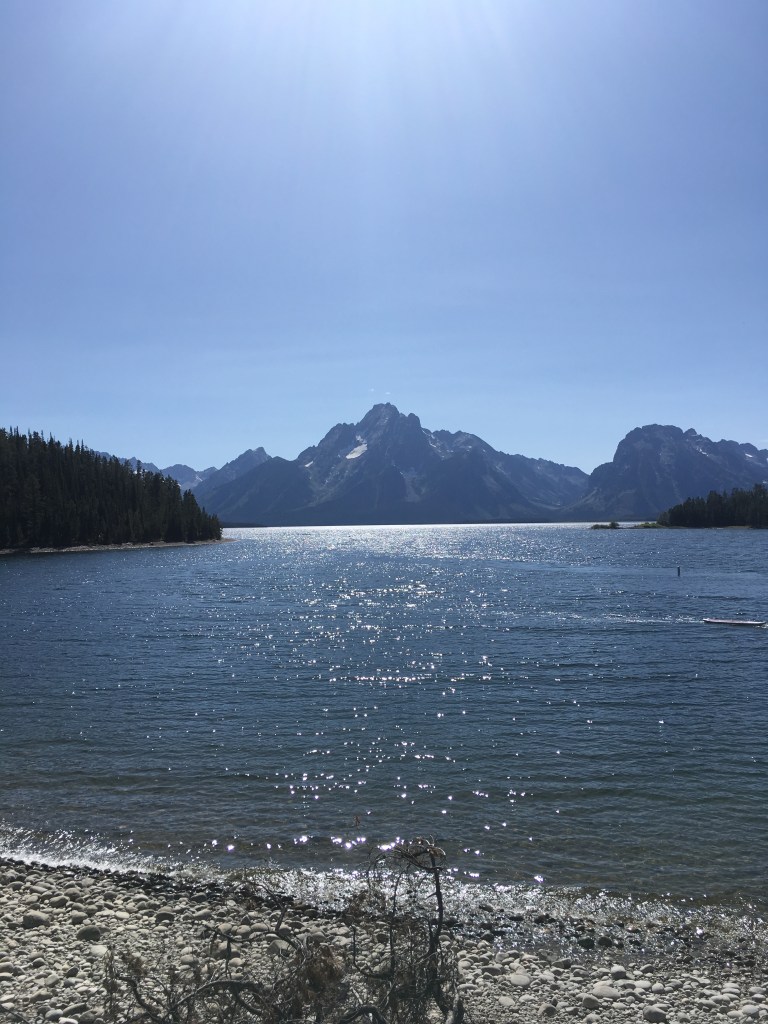
I could definitely have spent WAY MORE time in Grand Teton and hope someday we can go back for more hiking and kayaking. To me, as much as I loved Yellowstone, Tetons is a more manageable size and therefore less overwhelming. It was also way less crowded with other tourists which we really appreciated.
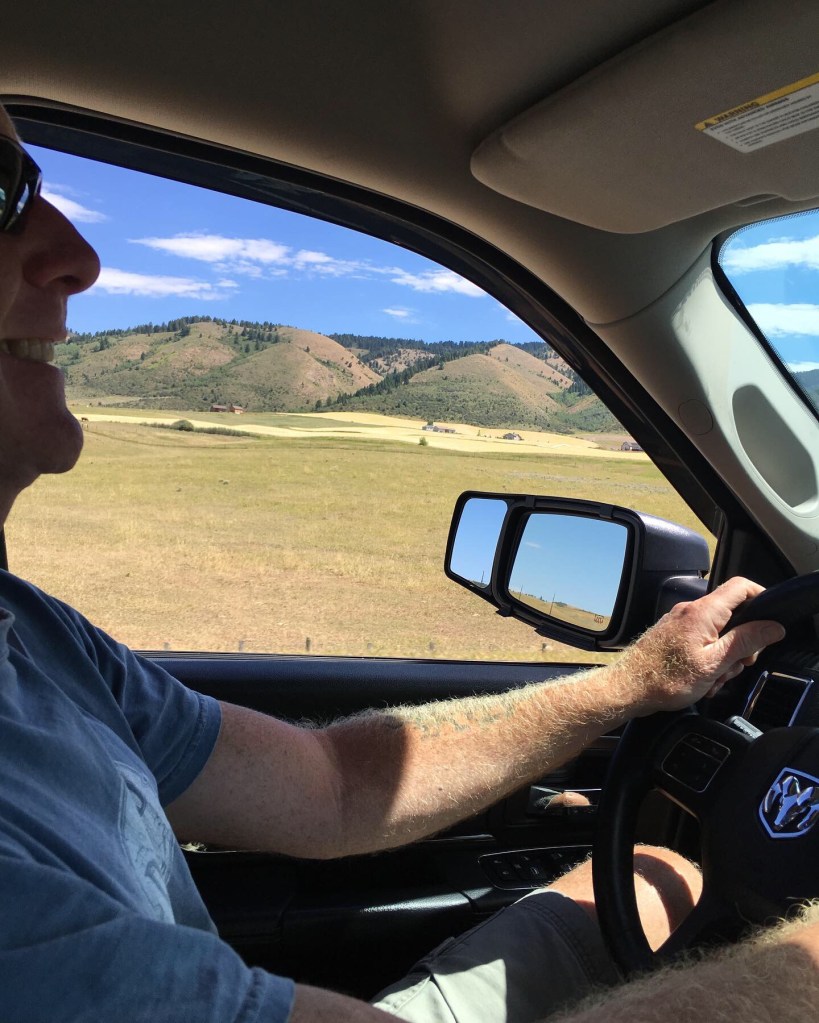
Day 24 found us on the road again, driving south along Route 89 to St. Charles, Idaho near Bear Lake. The drive again didn’t disappoint – following the Snake River and through the Bridger – Teton National forest. Arriving at our campground in St. Charles, I noticed a photocopied leaflet for Minnetonka Cave, just 10 miles away. We decided to check it out as there wasn’t much else going on in St. Charles (aside from amazing potatoes – they were delicious!).
WOW, was the cave fantastic! Discovered in the 1920’s, it’s a limestone cave up in the hills of the Cache National Forest. It was found by a grouse hunter who’s bird fell down onto a ledge – when he went to retrieve it, he felt cold air around his ankles and discovered the hidden entrance as it maintains a cool temperature of 40 degrees Fahrenheit year round.
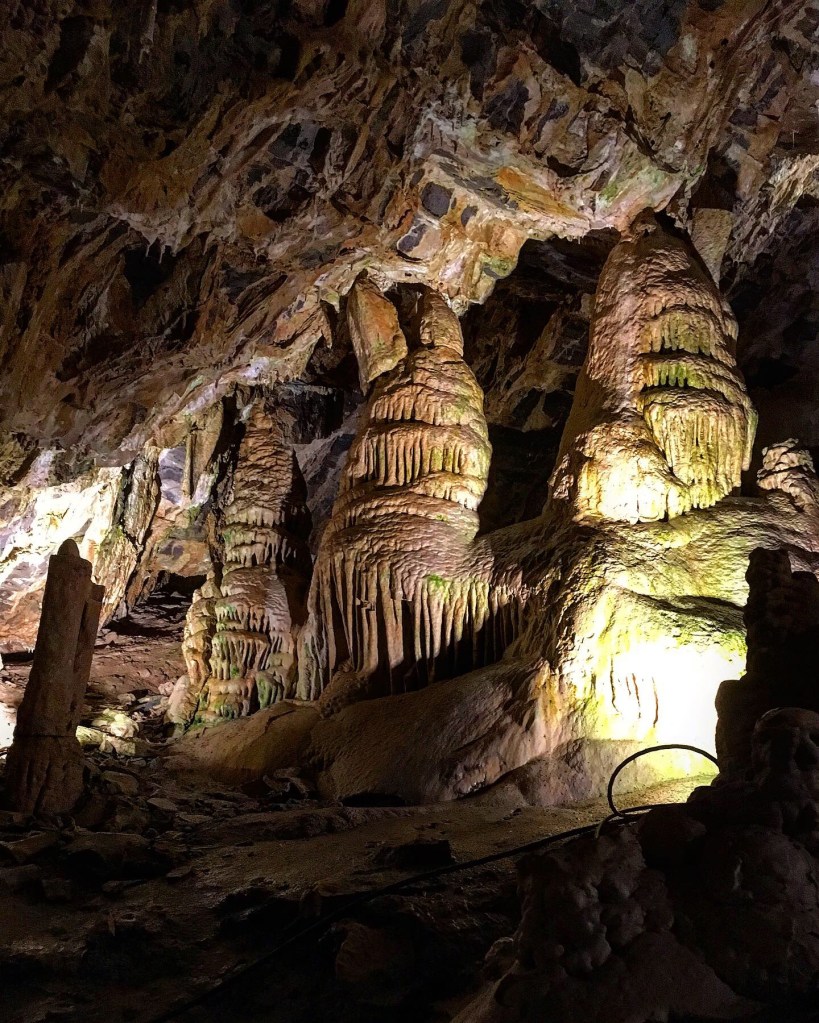
We were lucky to have Cheyenne, a geology student and 7 year veteran at the cave, as our guide for the 1/2 mile hike into it’s depths. We climbed about 770 steps, visiting different “rooms” filled with stalagmites, stalactites, columns and “bacon”. Cave bacon are mineral ribbons that form over thousands of years as water finds its way through the stone along the same path – and because there’s also iron in the mineral mix, when you shine a light through these ribbons, yup, you guessed it, it looks like bacon. And what name have the guides given the BIGGEST bacon ribbon in the cave? KEVIN (duh)!

Day 25 was another travel day and we overnighted in Provo, Utah, where we visited Larry Miller Dodge to have the Ram’s oil changed. You know you’re driving a LONG way when you have to have an oil change half way around. It was a great customer service experience, and we met Jay, a retired police office who’s now working part time at the dealer. Cassie made lots of friends as pretty much everyone on staff came by to give her some fuss as we were waiting for the truck!

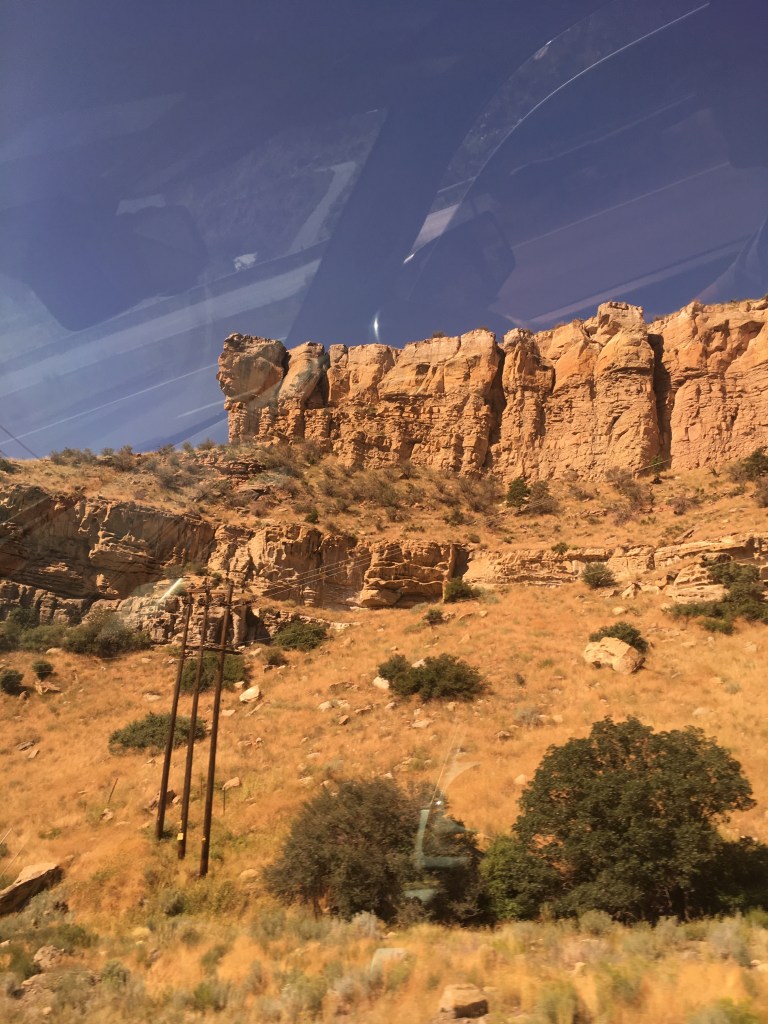
Day 26 was our travel day to Moab, Utah and we drove across 70 East to 191 South – again, incredible scenery on the road! Huge buttes (and that’s pronounced bee-ooots, not “buts” for all you Bevis and Butheads out there that keep LOLing my social media posts where that word appears!), Badland Cliffs, Roan Plateau and Book Cliffs.
After setting up camp, we drove into Arches National Park with Cassie to see the sights. Arches is a magical place! The towering sandstone formations and soaring natural arches are mind boggling! There are over 2,000 natural stone arches here.
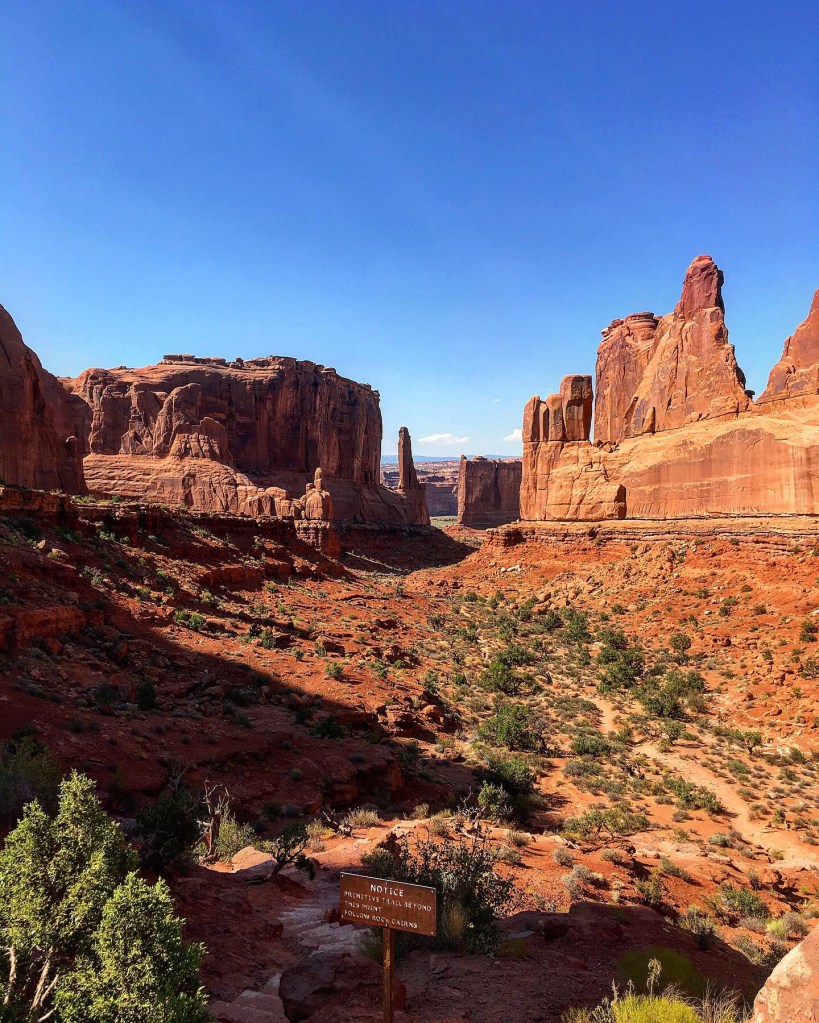
So again, we are witnessing the artistry that the combination of water and ice can create given 100,000 years of time to work within. As best they can tell, geologists believe an underground salt bed is responsible for the arches, spires, balanced rocks, sandstone fins and eroded monoliths. Thousands of feet thick in some places, the salt was deposited across the Colorado Plateau 300 million years ago when a sea flowed into the region and then eventually evaporated.
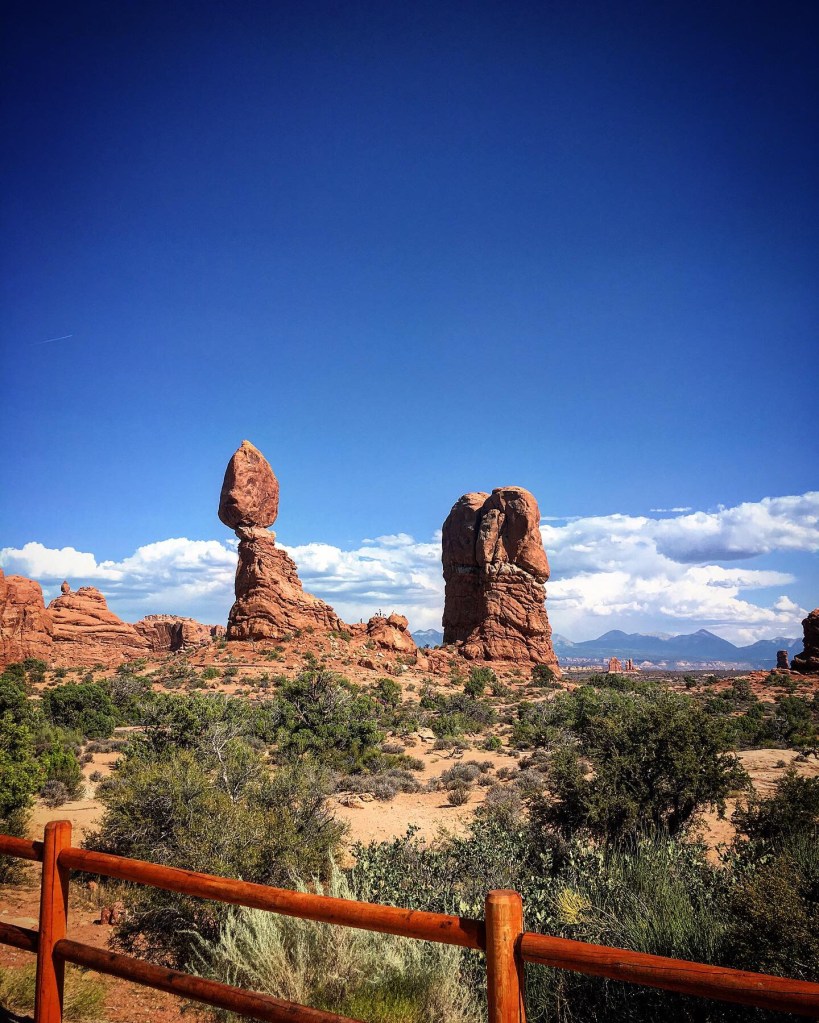
Over millions of years, the salt bed was covered in debris that became rock. Salt under pressure is unstable so as the bed shifted, buckled and repositioned itself, it thrust the rock layers up, creating domes. That’s where erosion, ice and water come in, slicing up these domes into fins, and eventually some the fins become arches.

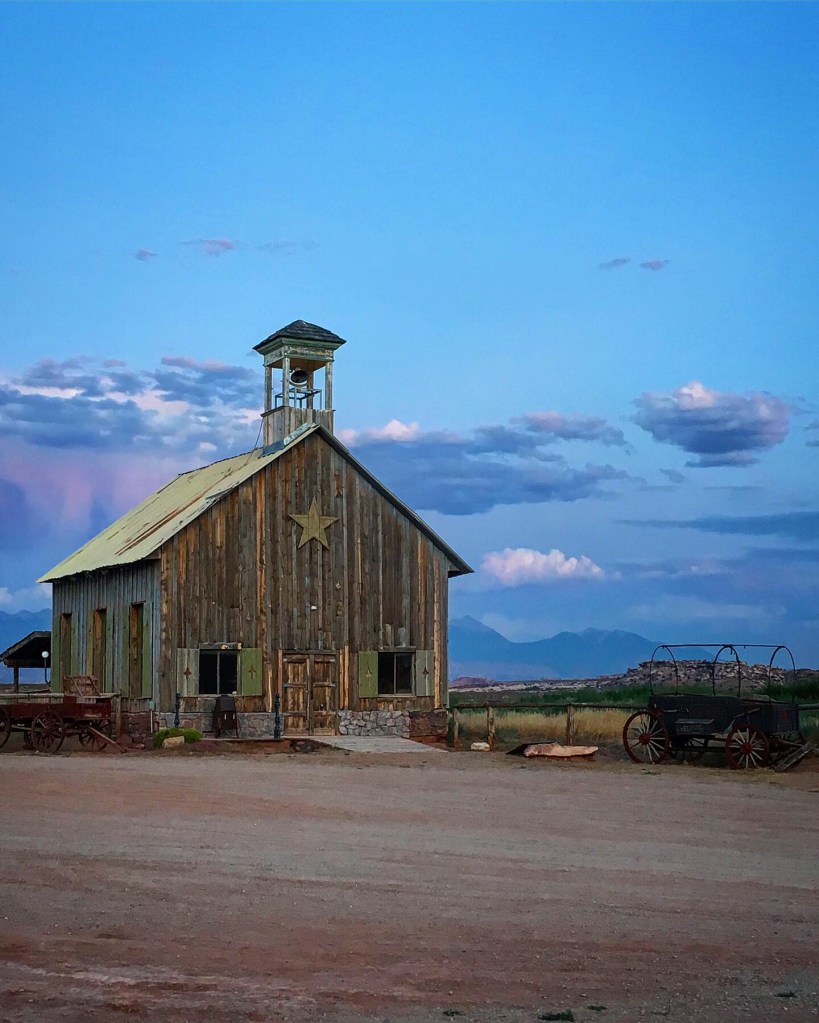
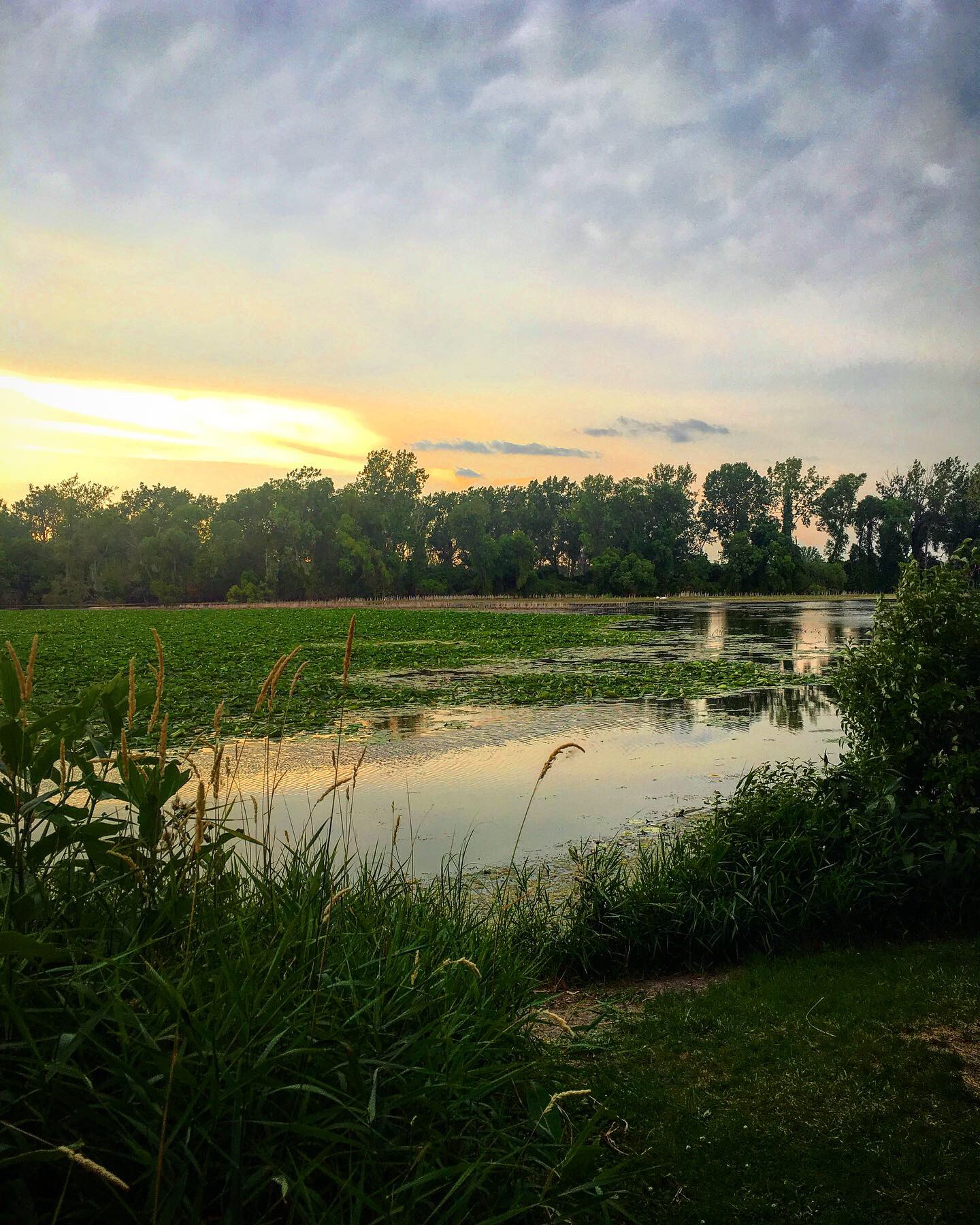
Back at camp, we had a beautiful sunset and snapped some fab pictures of the old western style schoolhouse that’s on the property (apparently it’s been used in movies, and I can totally believe it!).
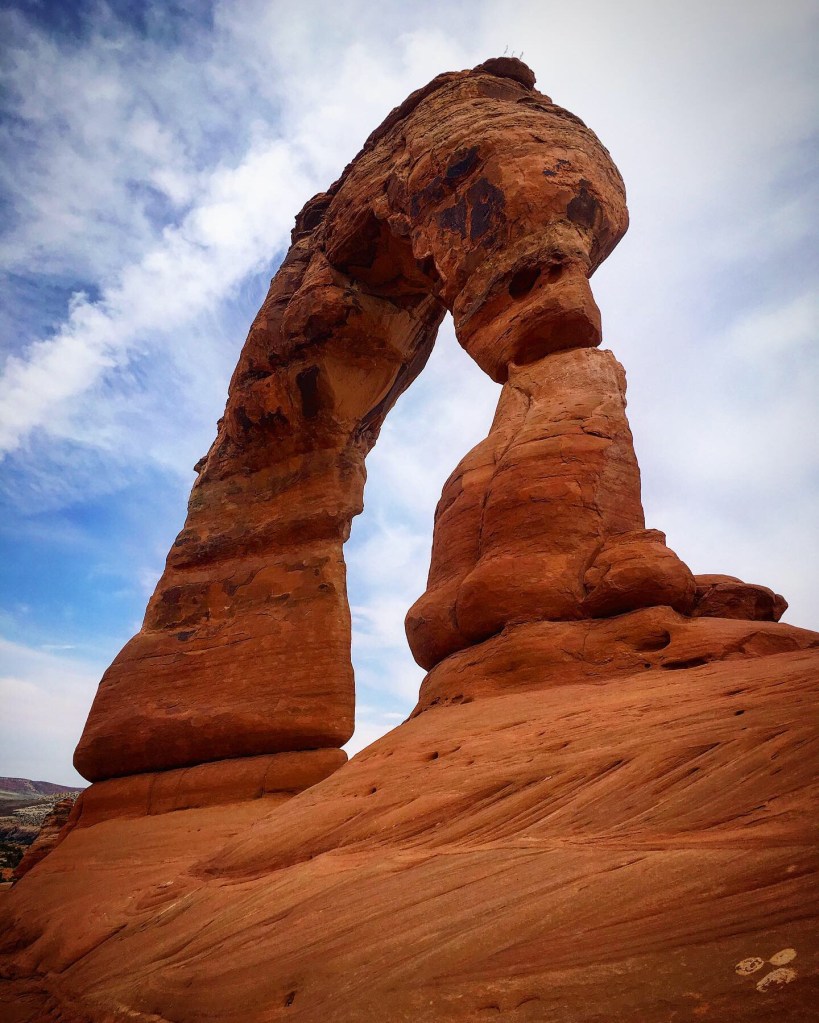
Day 27 was our day to hike in Arches as we boarded Cassie at a local vet’s for the day. We did the 3 mile hike out to Delicate Arch – it was a good hard slog especially with the heat and elevation. Although there were quite a few other folks out there, it didn’t spoil it. Native Americans believed that the Arches are portals into another world and after standing under them myself, I can understand why. It defies all logic that rock arches can span great distances and endure for eons so it must be magic!
In the afternoon, we hiked in the Devils Garden and were really lucky to have one of the few cloudy days of the trip so far – the clouds moved in and kept the temperatures in the 90’s a bit cooler than the 100+ degrees we’d had the day before walking around Moab.
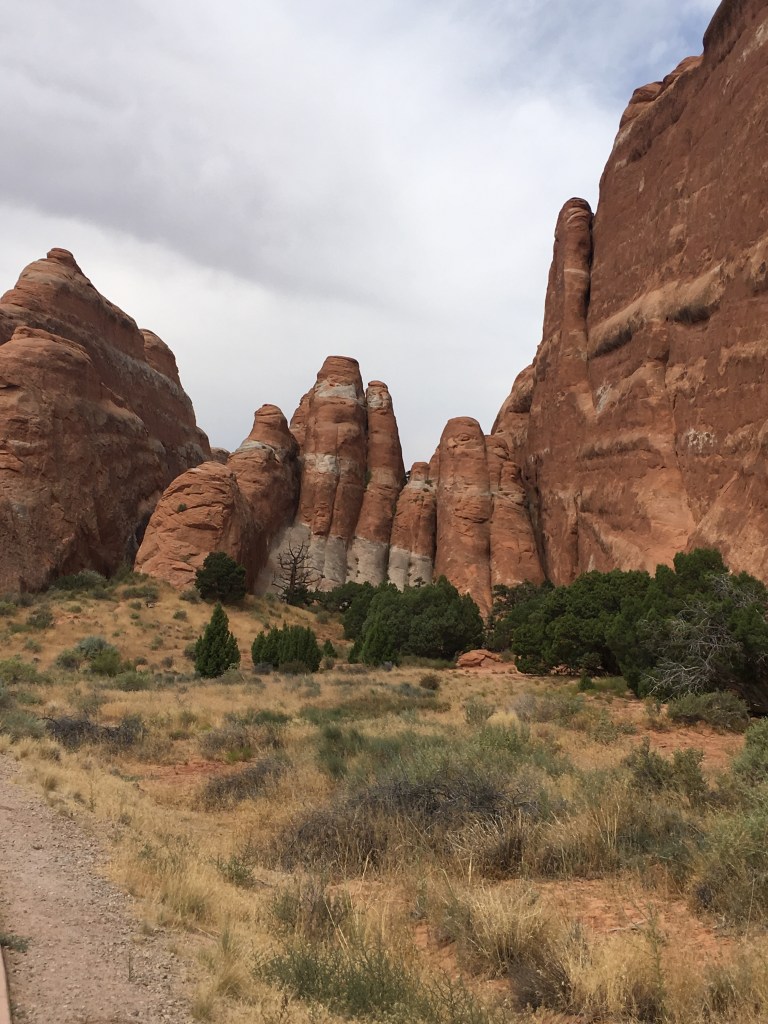
We visited the Tunnel Arch, the Pine Tree Arch and the Landscape Arch. The Landscape Arch is the longest free standing natural stone arch in the world and in 1991, a rock slab 60 feet long, 11 feet wide and 4 feet thick fell from the underside, leaving an even thinner ribbon of rock. This is a landscape that’s constantly changing – slowly but relentlessly as time, temperature, water and ice wield their carving tools.

Our last hike of the day was out to the Double Arch in the Window’s Section… again, the size of these soaring, giant spans defies belief and standing underneath them is awe-inspiring.

On Day 28, we visited Canyonlands National Park, about a 30 mile drive from our camp in Moab. On the way, of course there was more stunning scenery and of particular interest were 2 large Buttes named the Monitor and the Merrimac as they resemble the 2 iron-sided civil war ships facing off in a battle of the high “sea” of the Colorado Plain.

We chose to visit the Island in the Sky area, just barely scratching the surface of this 527 square mile, remote and wild park. There are very few paved roads and one areas of the park is accessible only by 4 wheel drive vehicles via gravel tracks.

Water and gravity are the architects here, cutting the flat layers of sedimentary rock into hundreds of canyons, mesas, buttes, arches, fins and spires. The Green and Colorado Rivers have done spectacular work!
The name “Island in the Sky” is so very fitting – even before we stood at the canyon’s rim looking down 2,200 feet to the lowest part, we could feel the elevation somehow. In some primal way, our bodies and senses knew we were on the high ground.
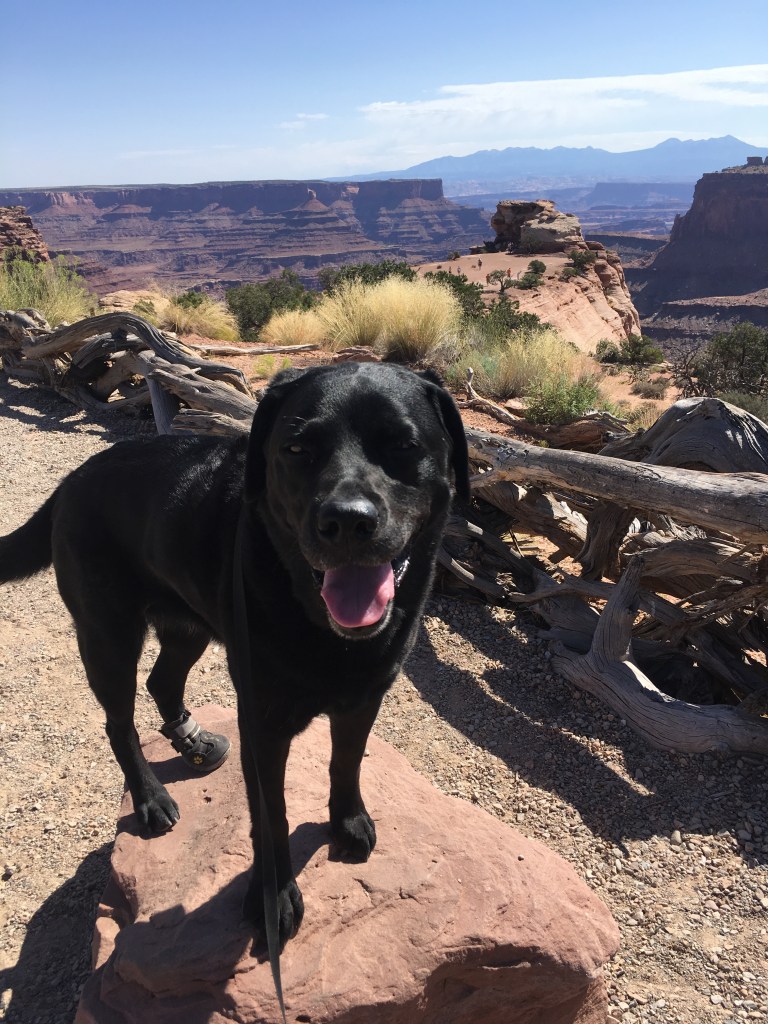
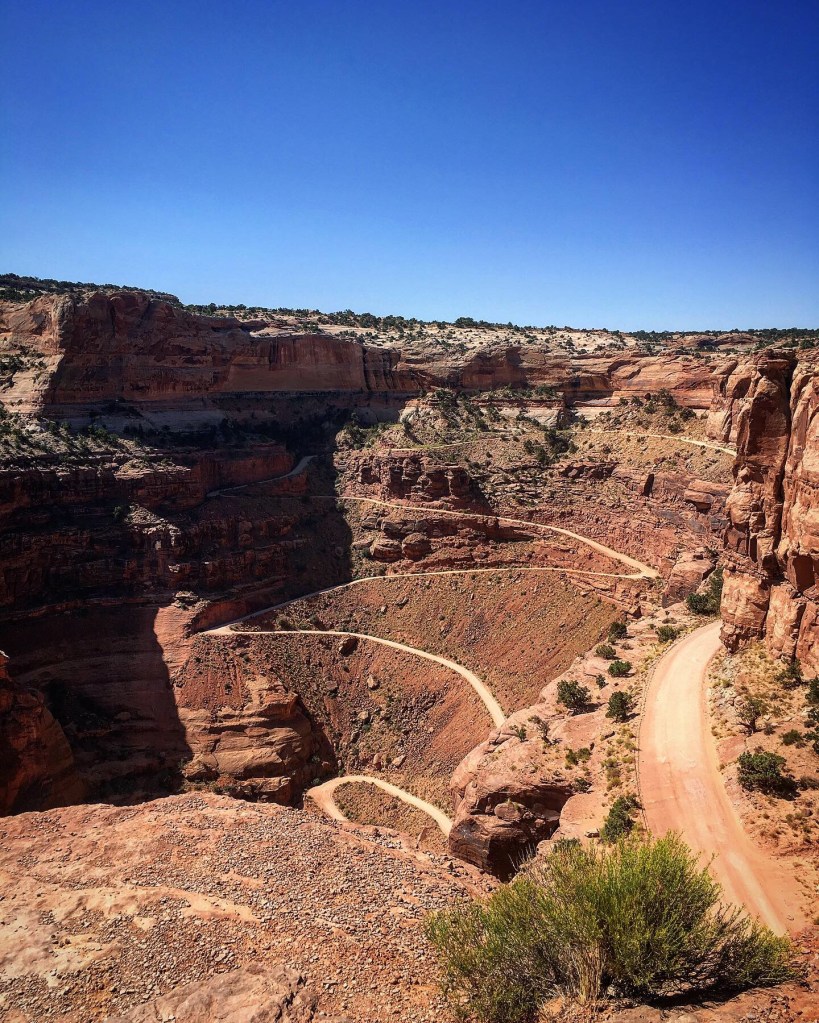
We stood on the edges of Shafer Canyon and Buck Canyon and looked down to the “white rim” 1,200 feet below us and to the very bottom where the Green River runs, 1,000 feet below that! The wind and bird calls were the only sounds filling this deep, alien landscape.
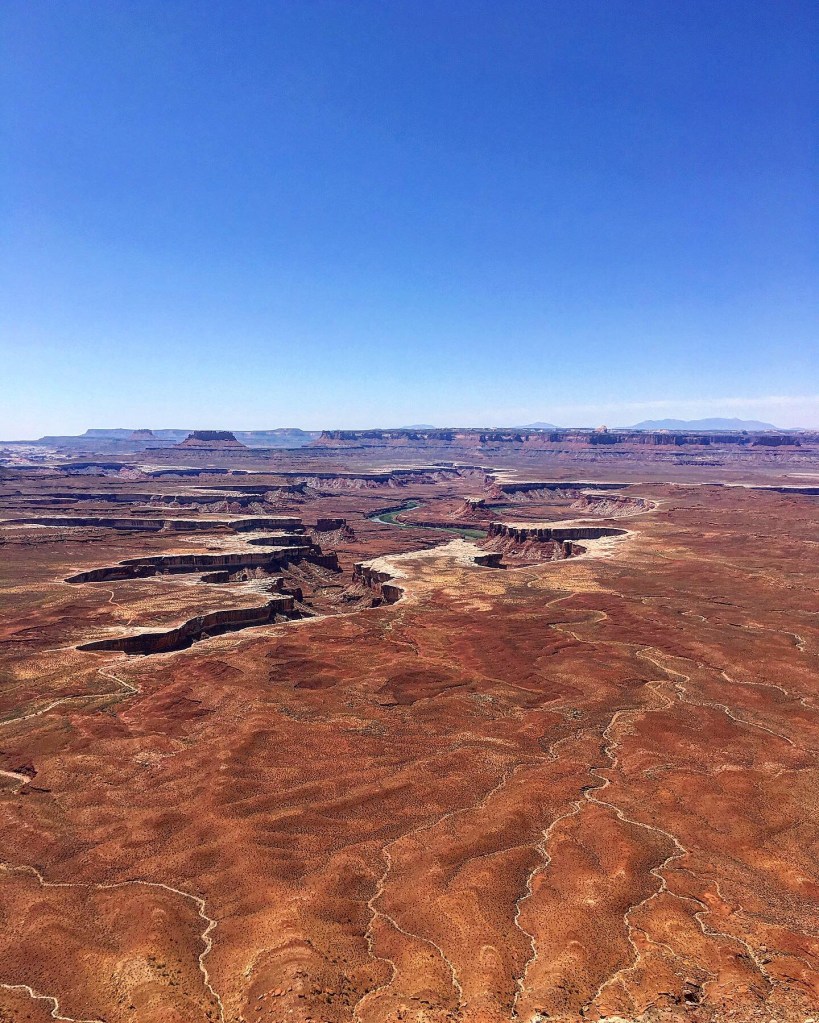
Over the past 7 days, we experienced 13,000 foot jagged mountain peaks, grassland valleys home to bison, elk, moose and pronghorn, beautiful lakes, running rivers, deep limestone caverns, soaring sandstone arches, and canyons that would look at home on Mars were it not for the rivers still flowing through their lowest parts. What a wild and beautiful world we live in – my heart is full and I can testify that being immersed in the natural world is truly soul-food!
Stay tuned for the next installment as we start heading back East to civilization, starting with Mesa Verde National Park.
















 Not Shy, but Retiring!